This guide is pending expert review.
Grief Support for Older Adults and Families: What Helps, When to Get Help
Not yet expert-reviewed · Last updated October 30, 2026
Grief Support: What Helps After a Loss
Need to talk to someone right now? Call or text 988, or chat at 988lifeline.org. The 988 Suicide & Crisis Lifeline is free, confidential, and available 24/7/365.[1][2] If you or someone else is in immediate danger, call 911.
Key takeaways
-
There is no single right way to mourn. Numbness, anger, guilt, trouble sleeping, little interest in food, and trouble concentrating can all be part of grief.[3]
-
For most people, the intense pain eases over time, with good and bad days along the way.[3]
-
Complicated grief is prolonged, intense mourning that makes day-to-day life very hard—extra help may be needed.[3]
-
Support can include family, faith communities, hospice bereavement programs, support groups, and grief counseling.[3][4]
-
If you can, postpone major life changes (selling a home, quitting a job) until thinking is clearer.[3]
-
Related: What to do when someone dies
-
Related: Loneliness and social isolation
-
Related: Caregiver burnout and support
-
Related: Obituary template
-
Related: How to write a eulogy
-
Related: Funeral costs planning
Writing down shared memories can comfort a family:
.
What grief can feel like
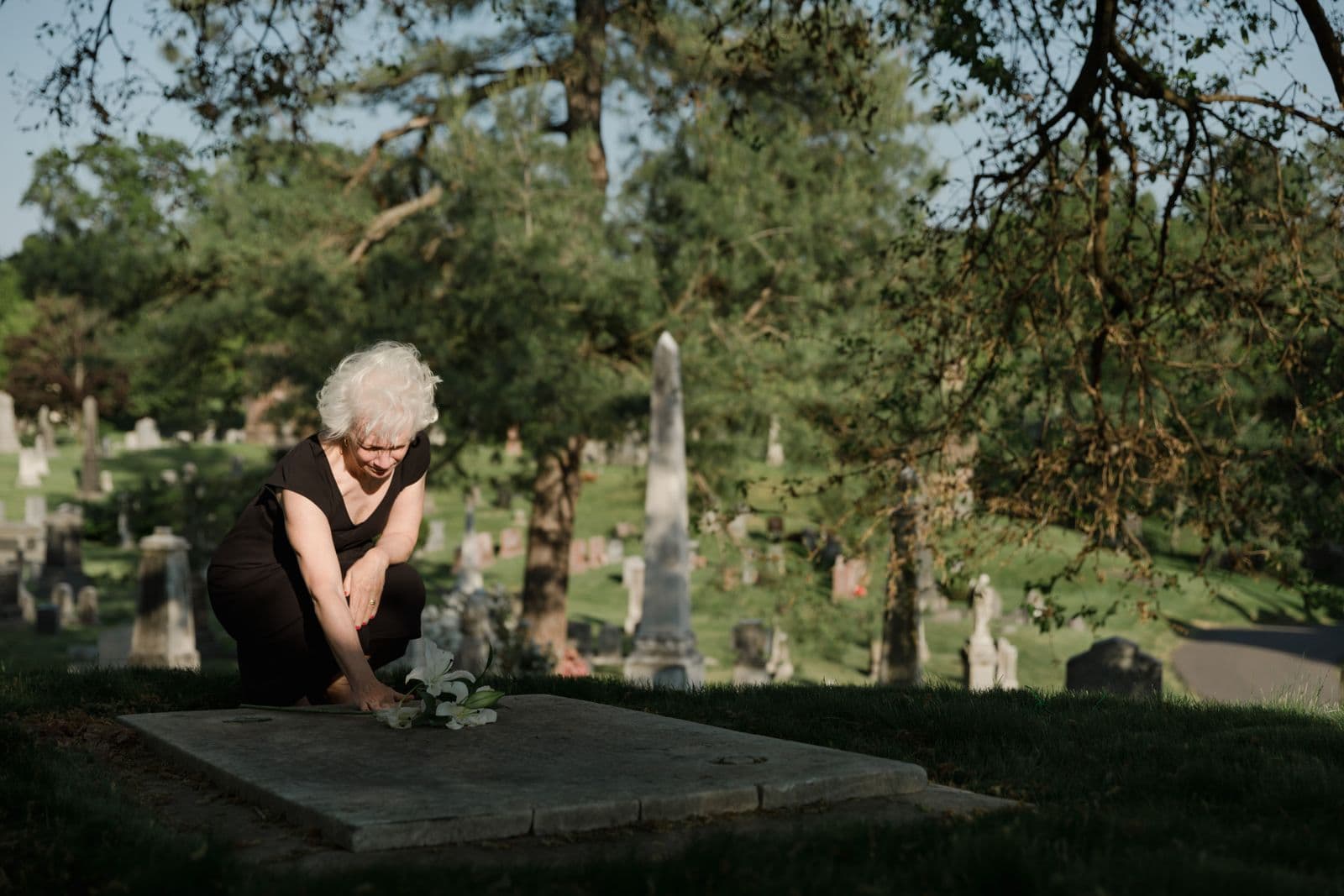
NIA describes mourning as feeling grief and sorrow after someone close dies. You may feel numb, shocked, fearful, guilty for being alive, or even angry at the person who died. All of these feelings can be normal.[3]
People who are grieving often:[3]
- Cry easily
- Have trouble sleeping
- Have little interest in food
- Have problems with concentration
- Have a hard time making decisions
You may still miss your loved one as time passes. Laughing at a joke or enjoying a visit can bring guilt or surprise—NIA says these can be common feelings too.[3]
MedlinePlus (NIH) notes that bereavement is the period of grief and mourning after a death, and that reactions can be mental, physical, social, or emotional. How long it lasts can depend on closeness, whether the death was expected, and other factors.[4]
A simple “what helps” map
| Need | Places to start (U.S.) |
|---|---|
| Immediate emotional crisis | Call or text 988; chat at 988lifeline.org[1][2] |
| Someone to talk with about the loss | Caring friends/family; grief counseling; support groups[3] |
| After a hospice death | Ask hospice about bereavement support—even if hospice was not used before the death, workers may still help you find it[3] |
| Local low-cost care | Sliding-fee clinics; state mental health agency; free/low-cost groups[3] |
| Practical after-death tasks | What to do when someone dies |
| Feeling alone more than sad | Loneliness and social isolation |
Table is an original teaching aid built from the sources below.
Finding a support system
NIA suggests not ignoring grief, and notes that family and friends may be grieving too. Sharing memories and stories about the person who died can help. Many people find it helpful when others talk directly about the loss rather than avoiding the name.[3]
Other options NIA lists:[3]
- Grief counseling or regular talk therapy with a counselor or therapist
- Support groups (general, or specialized—for example after Alzheimer’s disease)
- Hospitals, senior centers, nursing homes, religious groups, funeral homes, and doctors as places to ask about local groups
- Online support groups or counseling sessions if leaving home is hard
- Support books from a library
- Community resources through a community center, senior center, faith community, or hospital
Ask about a sliding-fee scale or payment plan if cost is a barrier. NIA also points people to health centers with free or low-cost care and to their state mental health agency.[3]
Taking care of your body while you mourn
Grief can be hard on health. NIA’s practical ideas include:[3]
- Exercise regularly, eat healthy food, and try to get enough sleep
- Avoid leaning on alcohol or smoking as the main coping tool
- Make mealtime plans (lunch with a friend; radio or TV on if eating alone feels too quiet)
- Accept offers of help and company when you can
- Keep doing favorite activities when you feel ready
- Reach out to your faith community if that fits you
- Keep medical appointments and tell your clinician if everyday tasks (hygiene, dressing, meals) are slipping
When to seek extra help (complicated grief)
NIA says it is normal to feel sad, numb, or lost for a while. For some people, mourning goes on so long or becomes so distressing that it is unhealthy. This prolonged, intense reaction is called complicated grief.[3]
Signs NIA lists may include:[3]
- Being unable to comprehend or accept the loss
- Intense sorrow and emotional pain
- Trouble resuming your own life and making plans for the future
- Overwhelmingly negative emotions
- Feeling preoccupied with the person who died or the circumstances of the death
- Being unable to find meaning or a purpose in life
If sadness makes day-to-day life very difficult, reach out to a support group, mental health professional, or loved ones.[3] In a crisis—especially if you have thoughts of suicide or are worried about your safety—call or text 988 or use the chat at 988lifeline.org.[1][2]
Major decisions can wait
If you have a choice, NIA advises delaying major life decisions—such as selling a home or leaving a job—until you are feeling better and thinking more clearly.[3] Urgent benefit calls and funeral arrangements still need attention; the point is to postpone big voluntary changes. See the practical checklist: What to do when someone dies.
Adult children who were caregiving may feel both relief and guilt when a parent dies. That mix is common. Support for caregivers: Caregiver burnout and support.
FAQ
How long does grief last?
There is no fixed timeline. Intensity often eases, but missing someone can continue. If grief stays overwhelming and blocks daily life, get extra help.[3][4]
Is counseling only for “complicated” grief?
No. Many people find counseling or a group helpful earlier. You do not have to wait until you are in crisis.[3]
What is 988?
988 is the U.S. Suicide & Crisis Lifeline. You can call, text, or chat for free, confidential support 24/7.[1][2]
Can hospice help if we never used hospice?
NIA says you can ask hospice workers for bereavement support even if hospice was not used before the death.[3]
Should I go through belongings right away?
Only when you feel ready. NIA suggests sorting into keep / give away / not sure, and asking others to help.[3]
Sources
- 988 Suicide & Crisis Lifeline. Official site. https://988lifeline.org/. Accessed October 30, 2026.
- Substance Abuse and Mental Health Services Administration (SAMHSA). 988 Suicide & Crisis Lifeline. https://www.samhsa.gov/find-help/988. Accessed October 30, 2026.
- National Institute on Aging. Coping With Grief and Loss. NIH/NIA. Content reviewed July 15, 2024. https://www.nia.nih.gov/health/grief-and-mourning/coping-grief-and-loss. Accessed October 30, 2026.
- MedlinePlus. Bereavement. National Library of Medicine. https://medlineplus.gov/bereavement.html. Accessed October 30, 2026.
- National Institute of Mental Health. Older Adults and Mental Health (topic hub; crisis line 988 noted on NIMH pages). https://www.nimh.nih.gov/health/topics/older-adults-and-mental-health. Accessed October 30, 2026.
Disclaimer
This article is for general education only and is not medical, legal, or financial advice. Talk to your doctor or a licensed mental health professional about your situation. In an emergency, call 911. If you or someone you love is in emotional crisis or thinking about suicide, call or text 988 (988 Suicide & Crisis Lifeline) or chat at 988lifeline.org.
Attribution
Portions of this page are adapted from "HowToLiveBetter" (高性价比人生指南) by eternity4719, https://github.com/eternity4719/HowToLiveBetter, licensed under CC BY 4.0 (https://creativecommons.org/licenses/by/4.0/). Changes: topic idea (life after loss) adapted from Chapters 25 and 29; rewritten for the U.S. context (not a direct translation), and re-sourced to U.S. research and official guidance.
Related guides
- What to Do When Someone Dies: A Practical U.S. Checklist
- Loneliness and Social Isolation in Older Adults: How to Spot It and Reconnect
- Caregiver Burnout: Signs, Support, and How to Care for Yourself Too

- Obituary Template: A Calm Fill-In Guide for Families
- How to Write a Eulogy: A Plain Structure You Can Finish

- Funeral Costs Planning: Know Your Rights and Compare Quotes
Last updated